Spectacle correction and task-specific lenses
Spectacles may be recommended when an examination shows that a change in prescription, lens design or task-specific correction could improve clarity, comfort or visual performance.
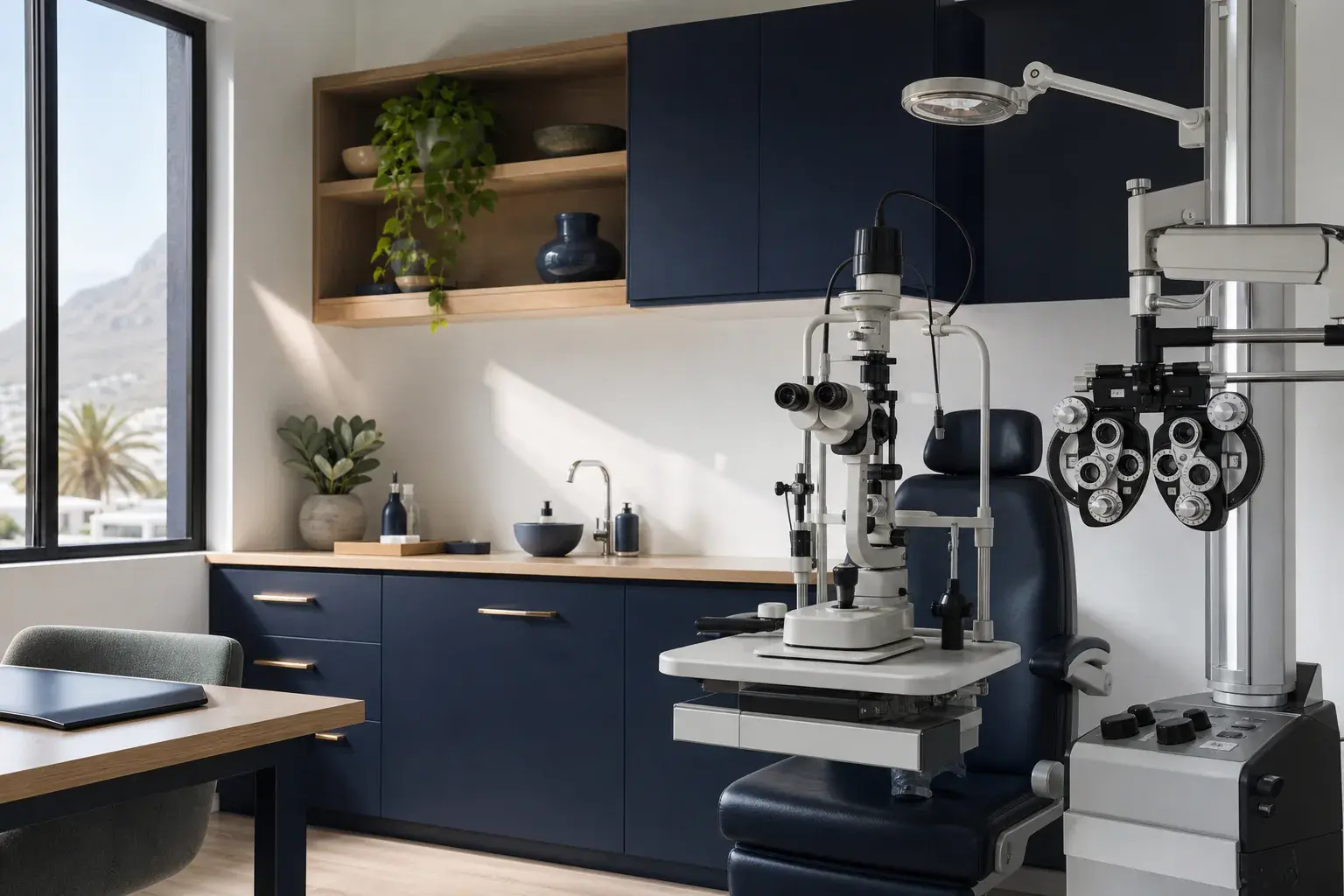
Spectacle correction involves more than transferring a prescription onto a pair of lenses. The most suitable option may depend on distance and near vision, screen use, driving, occupation, hobbies, previous experience, frame fit and how the two eyes work together.
Some people need one pair for most daily activities. Others may benefit from separate or task-specific correction for reading, computer work, driving, detailed close work or another particular visual demand.
On this page
What spectacle correction may address
Spectacle lenses may correct blur caused by myopia, hyperopia, regular astigmatism or presbyopia. They may also help when the two eyes have different prescriptions, or when a person has a particular distance, near or intermediate viewing need.
The prescription and lens design can be considered in relation to occupational and recreational tasks. Spectacles improve optical correction; they do not treat an underlying eye disease.
- Distance blur, near-vision difficulty and screen-distance needs
- Differences between the prescriptions of the two eyes
- Driving, detailed close work, sport or another particular visual task
Types of spectacle correction
Single-vision lenses have one main focusing purpose and may be prescribed for distance, reading or another specific range. Bifocal and progressive or multifocal lenses combine more than one viewing range, while occupational or computer lenses are designed around intermediate and near tasks.
Task-specific spectacles, prescription sunglasses and protective or sports eyewear may be relevant in some circumstances. The practice’s current supply range must be confirmed before any particular option is assumed to be available.
Lens and frame measurements
Lens position matters. Frame shape and fit affect where the lenses sit, and the optical centres need to be positioned for the wearer. Stronger or more complex prescriptions and multifocal designs may need additional measurements and careful frame selection.
Lens thickness and weight can sometimes be managed through suitable material, size and design choices. The best balance depends on the prescription, frame and intended use rather than on one material for everyone.
Optional lens features
Anti-reflection coatings may reduce reflections, scratch-resistant treatments may help protect the lens surface, and photochromic lenses darken in response to suitable light conditions. Polarised prescription sun lenses or tints may help with particular glare or light needs.
These are optional features with practical benefits and limitations. Blue-light filtering should not be presented as medically necessary or as a way to prevent eye damage.
Adapting to new spectacles
A new prescription or lens design may initially feel different. Some people adapt quickly, while others need more time, particularly after a substantial prescription change or when using multifocal lenses for the first time.
Persistent blur, discomfort, marked distortion or difficulty using the intended viewing area should be reviewed rather than simply tolerated. The spectacles, measurements, fit and clinical findings may all need to be reconsidered.
When spectacles may not provide enough correction
Some irregular corneas, complex prescriptions or particular visual needs may not be corrected adequately with spectacles alone. A contact-lens assessment or further investigation may then be discussed.
Spectacles can still remain useful as a back-up even when another form of correction is selected. The appropriate next step depends on the findings and the person’s practical needs.
Contact-lens fitting and evaluationFrequently asked questions
These answers are general. An individual assessment is needed for advice about your own eyes, prescription or lenses.
Do I always need new spectacles when my prescription changes?
Not necessarily. The size of the change, your symptoms, current spectacles, visual tasks and clinical findings all matter. The practitioner can explain whether an update is likely to provide a useful difference.
What is the difference between reading and occupational lenses?
Reading lenses are usually set mainly for a close distance. Occupational designs may provide a wider combination of near and intermediate vision for tasks such as reading and computer work, but are not usually intended for general distance use.
Are progressive lenses suitable for everyone?
Progressive lenses suit many people, but not every prescription, task or preference. Frame choice, measurements, previous experience and the viewing ranges you need should be considered before deciding.
How long should adaptation take?
Adaptation varies with the person and the change in prescription or design. If vision, comfort or use of the intended viewing area remains difficult, contact the practice for review rather than waiting indefinitely.
Can spectacles correct keratoconus?
Spectacles may provide useful correction in some earlier or milder cases, but an irregular cornea can leave distortion that spectacles cannot fully correct. A contact-lens assessment or ophthalmology input may then be appropriate.
Should I return if my new spectacles still feel wrong?
Yes. Persistent blur, discomfort, distortion or difficulty with the intended task should be checked. Bring the spectacles and describe where and when the problem occurs.
Talk to the practice about your eye care
Send a brief enquiry or call reception to discuss the next step. Please avoid detailed clinical information in the form.